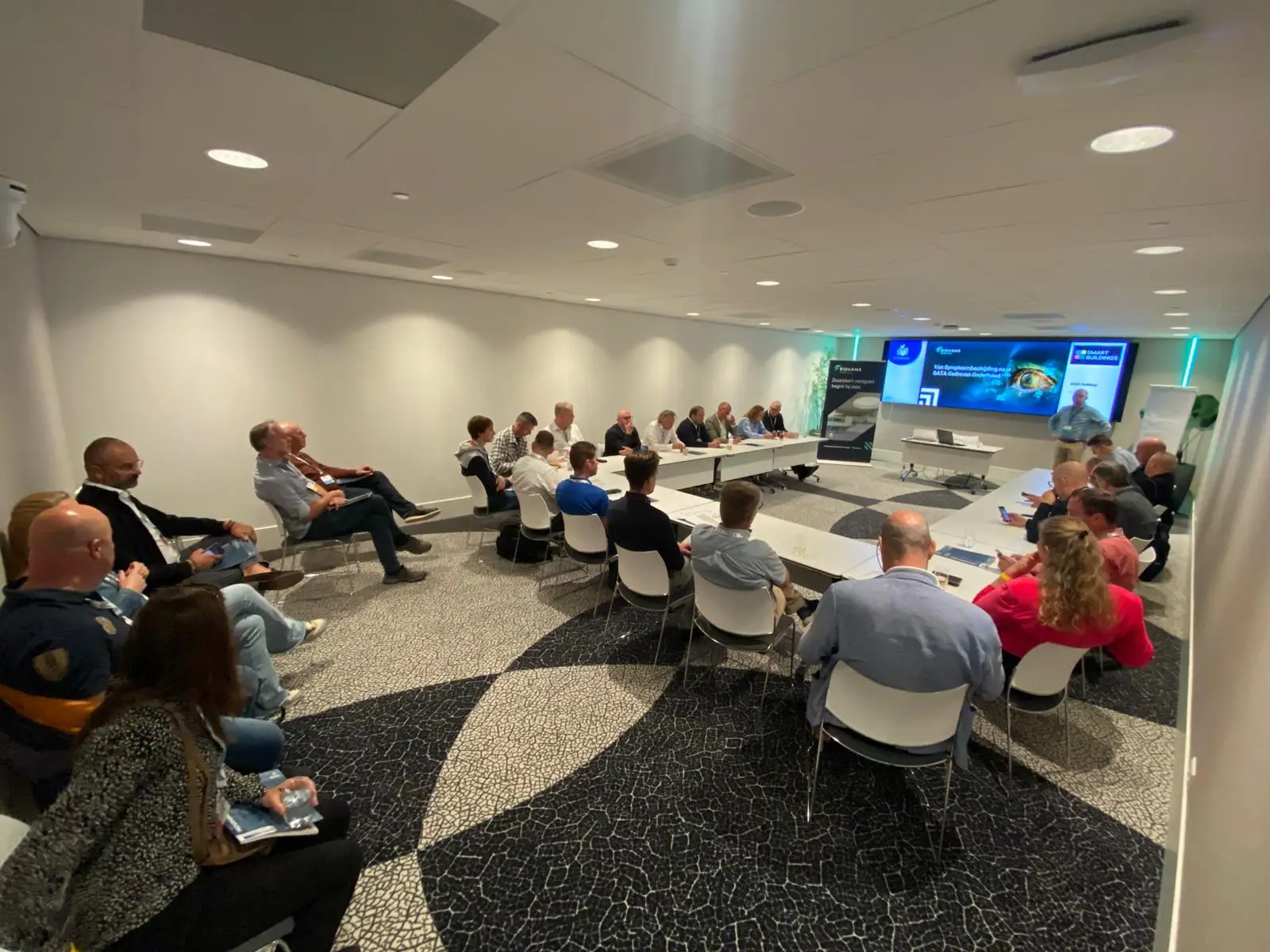
The transition toward data-driven building operations is accelerating across Europe, driven by regulatory pressure, rising ESG expectations and the growing realisation that traditional maintenance models cannot support the buildings of the future. Yet while technology makes rapid progress, organisations often struggle to align the people, processes and responsibilities needed to operate buildings in a fundamentally new way.
The real challenge ahead is not technical — it is organisational. Data-driven operations touch every part of the business, and success depends on the ability to connect these domains.
1. Traditional operations are not designed for real-time performance
Most operational teams still work with fixed schedules, manual inspections and reactive interventions. Data-driven buildings function differently:
- performance is monitored continuously,
- maintenance becomes predictive,
- diagnostics are automated,
- and optimisation is an ongoing process rather than an occasional activity.
This requires new workflows, different decision-making, and a mindset shift across the entire operational chain.
2. GACS defines a long-term operational roadmap, not a compliance checkbox
As European regulation evolves, GACS introduces a structured pathway toward data-driven operation.
Class C may represent the entry point, but Class A reflects the actual destination — a fully automated, insight-driven building operation.
The challenge is that different departments interpret this journey differently:
- some focus on minimum compliance,
- others on future infrastructure,
- and others on portfolio-wide value creation.
Connecting these interpretations into one shared roadmap is essential to avoid fragmented, short-lived solutions.
3. Operational, asset and financial domains must act as one system
Data-driven operations reshape the roles of all key stakeholders:
- Technical managers gain real-time control and better prioritisation.
- Asset managers gain continuous insight into lifecycle performance and long-term risk.
- Financial managers gain predictability, budget transparency and evidence-based planning.
But these benefits only materialise if the three domains operate in sync.
Without alignment, each department optimises for its own agenda — and the full potential of digital operation remains out of reach.
4. Market fragmentation complicates decision-making
The smart-building market is full of overlapping solutions, platforms, dashboards and partial “smart” add-ons.
Organisations often struggle with:
- incompatible systems,
- inconsistent data structures,
- vendor-specific ecosystems,
- and a lack of clear standards.
A unifying perspective is needed to evaluate technologies in relation to long-term portfolio strategy rather than short-term convenience.
5. The transition is cultural as much as operational
A shift to data-driven operation affects:
- daily routines,
- task allocation,
- KPIs,
- reporting cycles,
- and even job profiles.
Maintenance engineers evolve from reactive problem-solvers to proactive decision-makers.
Asset managers rely on continuous insights rather than annual assessments.
Financial managers operate with predictive forecasting instead of historical trends.
This level of change cannot be executed by technology alone — it requires coordination, communication and long-term organisational development.
Conclusion: A unified approach is essential for the data-driven future
The future of building operation depends on more than digital tools. It depends on the ability to connect operational, strategic and financial perspectives into one coherent approach.
Without alignment, organisations risk slow adoption, fragmented investments and missed long-term value.
The transition to data-driven operation needs a unifying force — one that bridges departments, clarifies long-term direction and ensures that every decision contributes to a more predictable, efficient and future-proof building operation.
Leave a reply